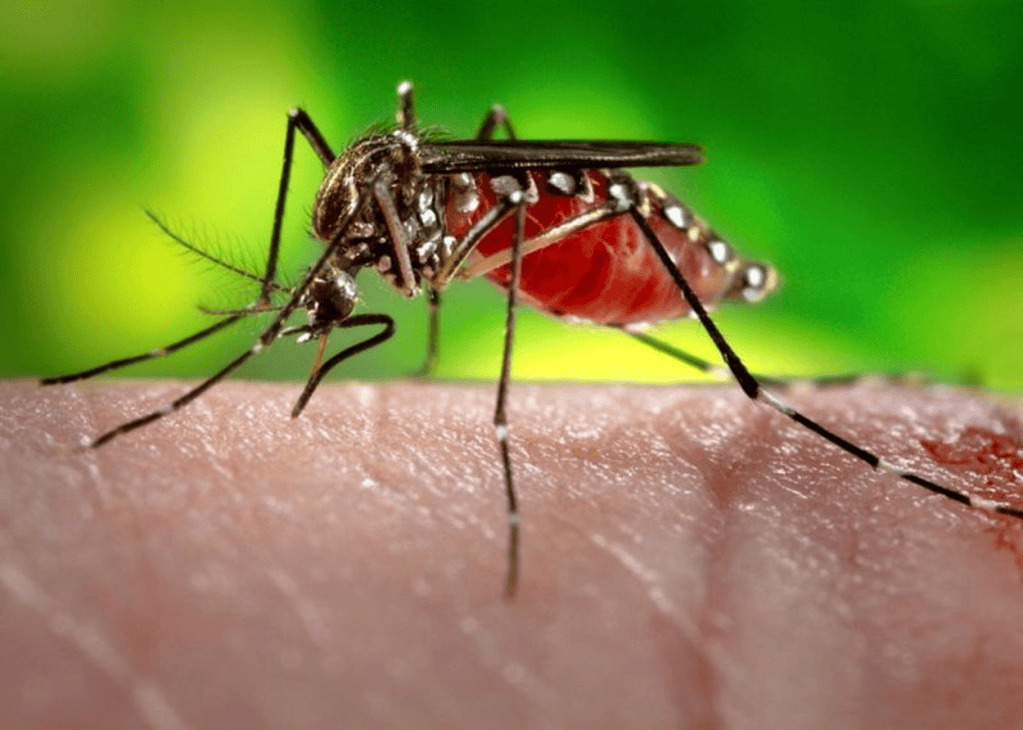
The Tampa Bay Area has a record number of locally-acquired dengue cases in 2026. During the month of September, there was one confirmed fatality and 160 cases in Hillsborough County, 7 in Pinellas County, and 2 in Pasco County.
All three counties have issued temporary states of emergency and deployed targeted truck and aerial spraying plus frequent mosquito trapping in affected residential communities.
The counties also recommend wearing long-sleeved shirts and pants when working outside, using insect repellent, and frequently replacing water in outdoor pet dishes and birdbaths.
The international travel-associated cases paint an even a worse picture. There are 212 dengue cases in this cohort as of September 19, 2026 — with Miami-Dade leading the pack with 126 cases, followed by Broward with 12 cases, and Palm Beach and Hillsborough with 12 cases each.
Typical symptoms associated with dengue include muscle aches, joint/bone/muscle pain, high fever, pain behind the eyes, nose or gum bleed, and sometimes a rash.
Dengue is not contagious and is transmitted by the bite of an infected Aedes aegypti mosquito – the same insect that spreads yellow fever.
Dr. Carlos J. Finlay, a Cuban epidemiologist, is credited with finding in 1881 that yellow fever was transmitted from infected to healthy humans by an Aedes aegypti mosquito.
But there was a problem with this major breakthrough. No one outside of Cuba believed him. And this was not unusual at the time. Reading from a letter to the editor penned by Cuban Founding Father Jose Marti in the New York Evening Post, dated March 25, 1889, and addressing an injurious comment printed in the Manufacturer of Philadelphia, Marti vehemently objected to the description of Cuban men as “destitute vagrants and immoral pigmies.” Nothing could have been further from the truth!
It took a team led by an American doctor, Walter Reed, to confirm the theory of Dr. Finlay in 1901. While Doctor Walter Reed was the recipient of much of the credit for beating yellow fever in history books, Dr. Finlay remained unknown to many.
Yellow fever decimated many countries’ populations. Between 1693 and 1905, yellow fever was responsible for at least 100,000 deaths in the United States. When the French tried to build a Panama Canal between 1882-1889, yellow fever became a serious problem for canal builders because the casualties were so numerous that it became difficult for the French company to retain a workforce to sustain the effort. During the U.S. successful endeavor to build the Canal between 1904-1914, there were no more deaths from yellow fever in Panama by 1906.
Between the French and the American efforts to build the Panama Canal, there were more than 30,000 deaths – the world’s project with the highest fatality rate.
Upon visiting Panama City, Panama in the past, I was touched when I saw a plaque honoring the Cuban physician in a park. Panamanians were fully aware of the importance that Dr. Finlay played in the construction of the Panama Canal and the immense debt of gratitude that they owed him by honoring his legacy. Cubans honor this hero as well!
PS: IF YOU LIKED THIS ARTICLE, YOU’LL LIKE MY BOOK “EXAMINING THE PAST TO UNDERSTAND THE PRESENT” — AVAILABLE ON THE AMAZON PLATFORM AT: HERE.

