The trajectory of a refugee is one of embracing other cultures while never forgetting the one where you come from. It could be painful at times but often life doesn’t offer many viable choices.
With fifty-nine years living in the United States, I’d like to offer four incidents that caused me to stop and think deeply about how to respond politely and adequately to each.
The first one deals with my Ponce surname. Some people assume automatically that I am Puerto Rican — as Ponce is one of the most important cities in this Caribbean Island. Ponceños think so highly of their city that their motto is “Ponce es Ponce y lo demas es parking” or “Ponce is Ponce and all other cities in Puerto Rico don’t measure up.” The city was founded in 1692 and is named after Juan Ponce de León y Loayza, the great grandson of Spanish conquistator Juan Ponce de León.
To the great surprise of many when I clarify that I am Cuban American, they learn that there are Ponces of all nationalities. But let’s get a reality check. If you gathered all the Ponces throughout the world in the city of Ponce, Puerto Rico, this metropolis would become the center of attention of the entire world. No one could bring together so much talent to one place! Just kidding!
Others asked me if I’m related to the Spanish conquistador Juan Ponce de León. There are all kinds of insinuations about this question – one of which is that for me to be treated like a VIP in the world, I have to be related to the Spanish royalty. A Cuban-American, a denizen from a Caribbean Island – even one that Christopher Columbus described in 1492 as “the most beautiful land that human eyes have ever seen” — does not deserve the top scores in these people’s scorecards.
Those who underestimate Cuban Americans have no clue about the grit, determination, and successes of so many of us who have achieved the rewards that the American Dream has to offer. Just think of two outstanding Cubanos in American society nowadays: U.S. Secretary of State Marco Rubio and the 2025 recipient of the Heisman Trophy, Fernando Mendoza.
But let’s follow up with a history lesson regarding the Spanish conquistador and the country Spain. After the Christian armies recaptured territories from the Muslims that had occupied Spain since 711 AD, multiple Christian kingdoms emerged like Castile and Aragon. An important milestone for the unification of Spain was the marriage in 1469 between King Ferdinand of Aragon and Queen Isabella of Castile. An even more important event was the conquest of Granada in 1492 – the last Muslim stronghold in the Iberian Peninsula and which played a pivotal role in the unification of the country.
So, the “de León” in the Spanish Conquistador’s Ponce surname was indicative that this family came from the Kingdom of León before the reunification of Spain. It pertains to a geographic region and has nothing to do with one’s genealogy. It is very possible that I may be related to this Spanish conquistador’s family – as Ponce is not a common surname. But I’m not losing any sleep over it.
To make it easier to those who want to place such an important value to my ethnicity, I often refer to myself as: “Jorge Ponce de La Habana” – my birthplace.
Upon finding out where I come from, many want to display their pseudo erudition by asking whether I have gone back to Cuba. I quickly respond that I would never set foot on a communist gulag that my family fled from, and that has continued to oppress the Cuba people for sixty-six years. I clarify that I will only go back when I am able to drink a Cuba Libre with authentic Cuban American Bacardi Rum in a Cuba that is really Libre – in a Cuba that has replaced the Communist motto of “Patria y Muerte” (“Country or Death”) with a more Christian alternative of “Patria, Vida, y Libertad” (“Country, Life, and Freedom”).
But most are not done with me yet. When they see my name spelled on multiple forms as “Jorge,” they proceed to call me “George.” If my mother would have wanted me to name me “George,” she would have done so. The pronunciation of Jorge as “horhe” does not even come close to the pronunciation of “George.” With the U.S. population in 2025 made up of 68 million (20%) Hispanics, I would have thought that many would run across many “Jorge’s” in their business dealings by now. Popular American Writer Dale Carnegie in his magnum opus book “How to Win Friends and Influence People” reminded his readers that “a person’s name is, to that person, the sweetest and most important sound in any language.” Mr. Carnegie realized that it was not just the correct spelling of a person’s name that mattered, but its pronunciation as well.
And the last question is one that I’ve asked myself repeatedly. How to respond when people ask me where do I come from. In the past, I’ve responded by calling myself a Cuban American. But when I’ve traveled overseas and I’ve responded this way, people confused my allegiance to the communist government in Cuba. In fact, most of these people expressed their admiration for Fidel Castro and Che Guevara — both of which I consider to be a”che”sinos! And rather than enjoying my vacation, this triggered an adrenalin boost of negative energy – which is totally unnecessary for good health and to seize the joyous moments that life offers us. Therefore, I’ve made an adjustment.
Cuba will always be a part of me, of my personality, of my way of thinking. But the Cuba that I keep in my soul and the one that I toast to when I order a Cuba Libre is the Cuba BC (Before Castro). I share nothing in common with the Cuba DC (During Castro) and Cuba AC (After Castro).
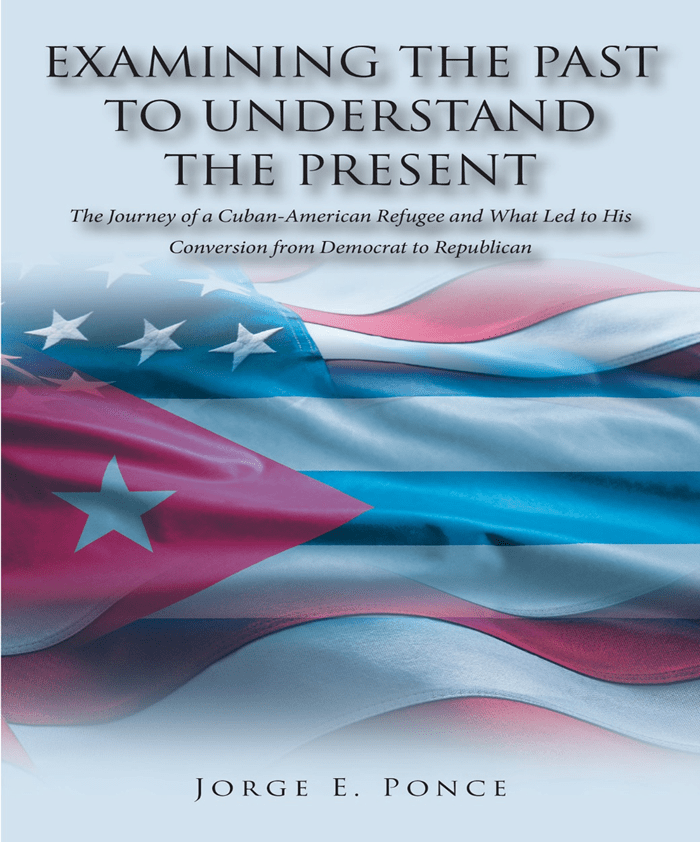
When I’m asked this question again, I’ll respond that I am “an American of Cuban descent.”
 Jorge E. Ponce